
Epigastric pain is a semiological trap. The stomach and pancreas share the same parietal projection, in the upper abdomen. Location alone does not allow one to distinguish between a common gastralgia and an early pancreatic involvement. It is the behavior of the pain, associated signs, and biological markers that guide the clinician.
Irradiation and kinetics of upper abdominal pain
Gastric pain generally remains anterior and localized in the epigastrium. It fluctuates with food intake: worsened when fasting in duodenal ulcers, triggered by meals in gastritis. Body position does not significantly alter it.
Pancreatic pain is distinguished by its radiating pain towards the back, often described as a band crossing the abdomen. It worsens when lying on the back and may lessen when the patient leans forward with knees bent. This postural behavior strongly points towards the pancreas, even when the pain is located exactly where gastroesophageal reflux occurs.
Kinetics is as important as topography. Gastric pain evolves in brief episodes, often relieved by an antacid. Acute pancreatic pain sets in within hours, reaches a high plateau of intensity, and persists for several days without responding to antacids. It is this continuous and refractory nature that should raise concern.
To differentiate between stomach and pancreatic pain, three criteria must be considered: the direction of irradiation, the influence of posture, and the response to standard symptomatic treatments.

Associated digestive signs: nausea, vomiting, and transit
Nausea and vomiting accompany both types of pain, which often complicates the picture. The difference lies in their intensity and context.
In gastric disorders (gastritis, ulcers, reflux), nausea is moderate. Vomiting sometimes relieves the pain. Retrosternal burning and acid regurgitation point towards the esophagus and stomach. Transit usually remains normal.
In acute pancreatitis, vomiting is severe and does not relieve the pain. The abdomen becomes tender, sometimes distended. Fever may appear, accompanied by tachycardia. A sign often underestimated in popular articles: chronic pancreatitis causes fatty, pale, and foul-smelling stools (steatorrhea), indicating an enzymatic deficiency in fat digestion. This change in transit, associated with progressive weight loss, is not found in classic gastric pathologies.
- Retrosternal burning and acid regurgitation: gastric or esophageal orientation
- Refractory vomiting with persistent pain and fever: suspicion of acute pancreatitis
- Fatty stools with progressive weight loss: exocrine pancreatic insufficiency to explore
- Jaundice associated with upper pain: biliopancreatic involvement, urgent consultation
Serum lipase and limits of biological assessment
The measurement of serum lipase is the reference biological marker for confirming acute pancreatitis. An elevation greater than three times the normal level, associated with compatible abdominal pain, is sufficient to make the diagnosis without immediate imaging.
A point often misunderstood: lipase levels do not correlate with the severity of the attack. A very high lipase does not mean a more severe pancreatitis, and vice versa. Severity is assessed based on clinical criteria (organ failure, local complications) and not solely on biology.
In gastric pain, lipase remains normal. This simple test can therefore clarify doubts when clinical findings are inconclusive. We emphasize that this assessment is the responsibility of the physician: persistent epigastric pain that is not relieved by usual measures justifies a prompt consultation rather than prolonged self-medication.
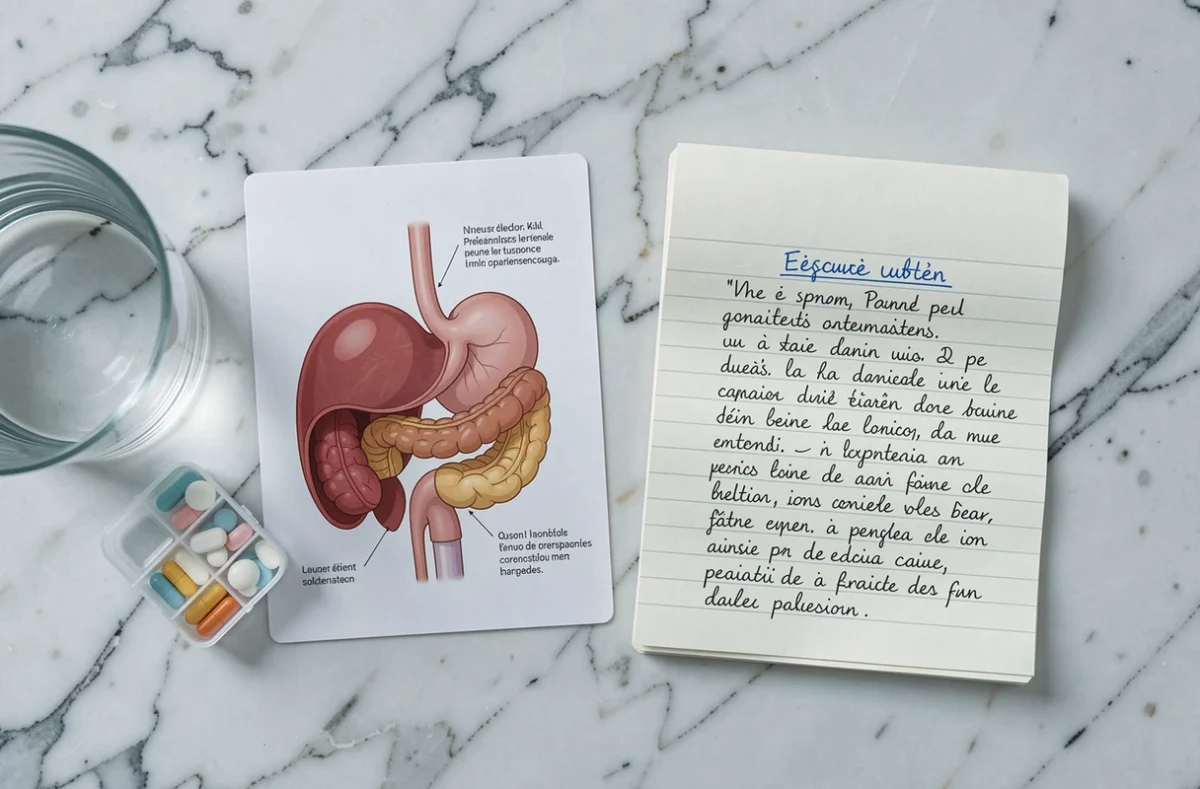
Acute pancreatitis: main causes and serious warning signs
The two dominant causes of acute pancreatitis are gallstones and excessive alcohol consumption. Other etiologies exist (hypertriglyceridemia, medications, autoimmune causes), but these two factors cover the vast majority of cases.
The clinical context helps guide the diagnosis. Sudden epigastric pain in a patient with a history of gallstones suggests a stone migration. Pain occurring after significant alcohol consumption over several days points to a toxic origin.
Some warning signs require immediate hospitalization:
- Intense abdominal pain with abdominal guarding and high fever
- Jaundice (yellowing of the skin and eyes) associated with pain
- Shortness of breath or malaise with upper pain, which may indicate a systemic complication
- Intractable vomiting preventing any oral hydration
These presentations go beyond simple gastralgia. Upper pain accompanied by shortness of breath, malaise, or jaundice should not be default attributed to the stomach: it requires urgent assessment to rule out serious pancreatic or biliary involvement.
The distinction between gastric pain and pancreatic pain relies on a bundle of clues, never on a single criterion. Back radiation, persistence despite antacids, lipid transit disturbances, and lipase measurement form a coherent set that guides the diagnosis. In the face of unusual or prolonged epigastric pain, medical consultation remains the only reliable reflex.