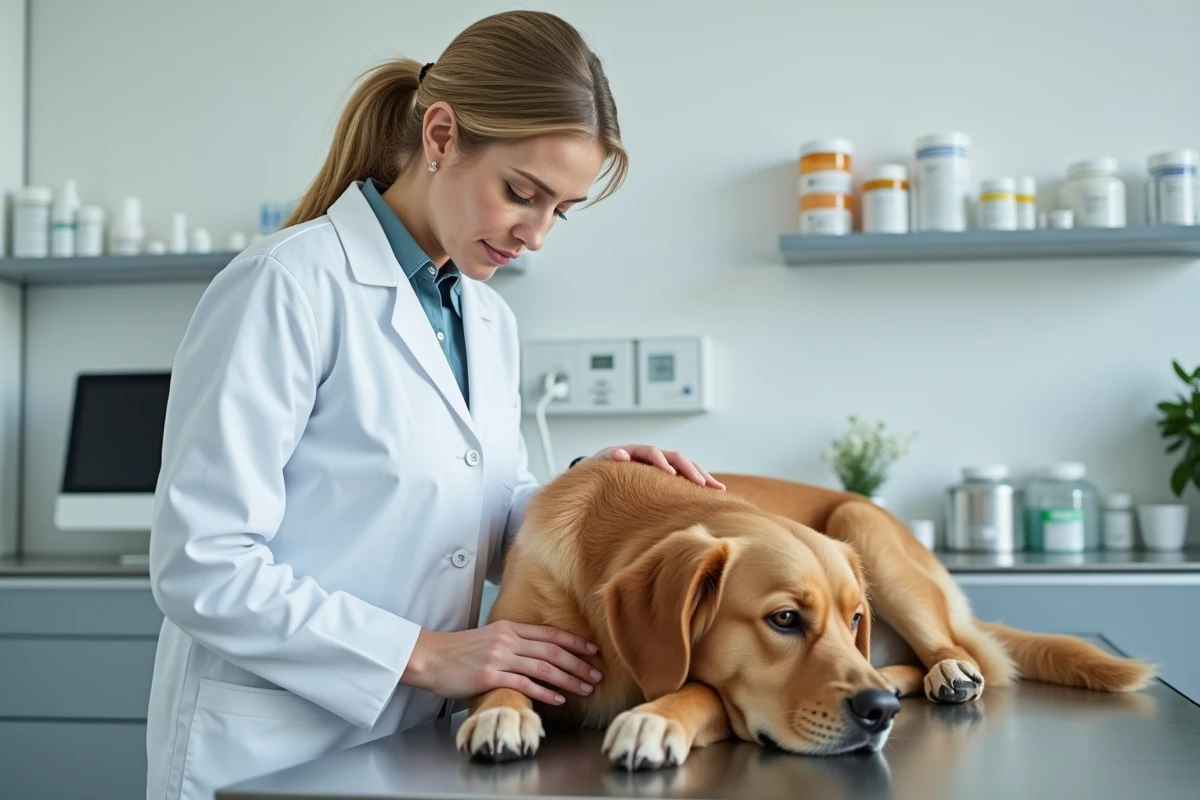
Gabapentin is one of the molecules whose veterinary use has progressed faster than the clinical data that accompany it. Prescribed for dogs for neuropathic pain, refractory epilepsy, or situational anxiety, it raises a measurable question: what is the actual effectiveness depending on the type of pain, and at what cost in side effects?
Gabapentin vs pregabalin in dogs: compared data
Both molecules belong to the same family (gabapentinoids) and target voltage-dependent calcium channels. However, their profiles diverge on several documented clinical criteria.
| Criterion | Gabapentin | Pregabalin |
|---|---|---|
| Acute neuropathic pain | Superior efficacy (meta-analysis University of Liège, 2026) | Lower efficacy in the acute phase |
| Long-term tolerance | Lower tolerance on prolonged treatments | Better chronic tolerance profile |
| Common dosage | about 10-11 mg/kg every 8 hours | Variable, often in 2 daily doses |
| Sedation in brachycephalic breeds | Excessive in 20 to 30% of subjects at standard doses (CFMV survey, 2025) | Less documented data |
| Antiepileptic use | Adjunct treatment in refractory epilepsies | Less prescribed in canine neurology |
This table, based on the meta-analysis published in Veterinary Anaesthesia and Analgesia in February 2026, shows that the choice between the two molecules primarily depends on the expected duration of treatment. For a short protocol (post-surgical, acute crisis), gabapentin retains the advantage. For long-term management, pregabalin deserves to be discussed with the veterinarian.
Several owners share their opinions on gabapentin for dogs and confirm this distinction between occasional use and chronic treatment.
Sedation and brachycephalic breeds: an underestimated risk
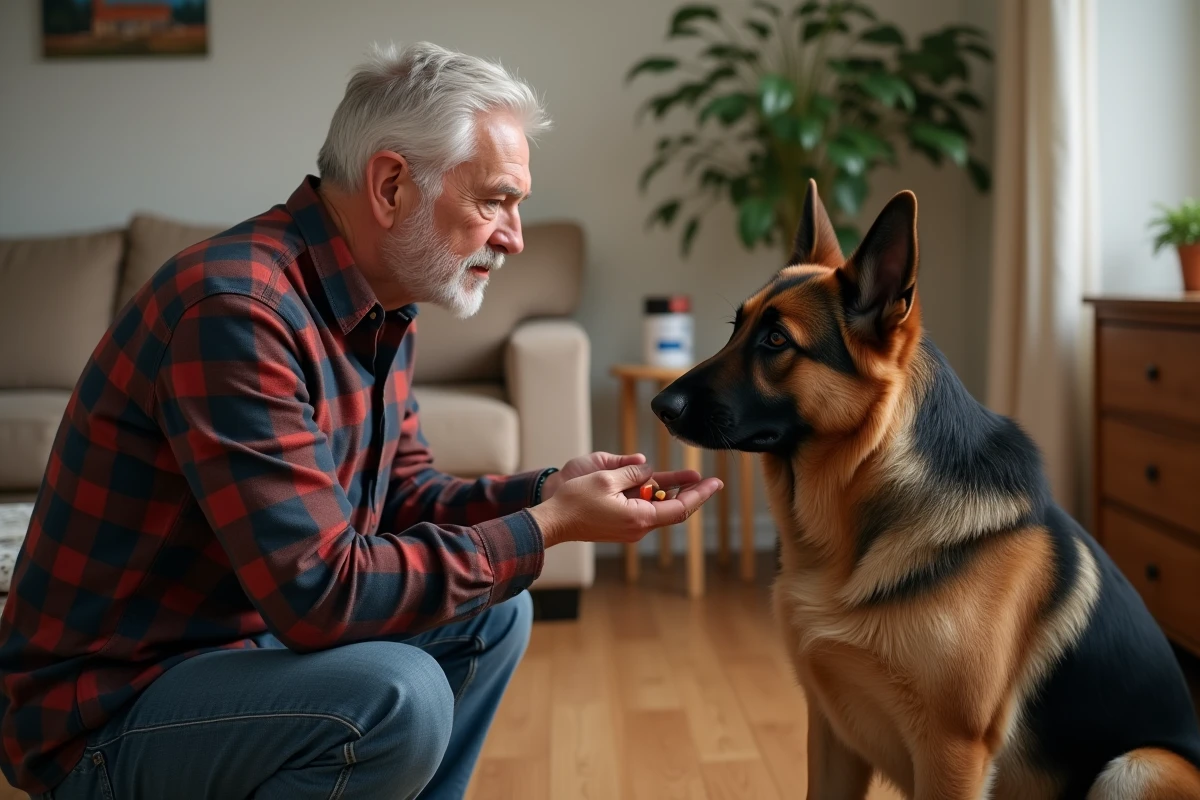
Sedation is the most common side effect of gabapentin in dogs. It is often accompanied by a loss of coordination (ataxia) and marked drowsiness in the first few days.
The multicentric French survey conducted by the French College of Veterinary Medicine, published in November 2025, provides more precise insight. Brachycephalic breeds exhibit excessive sedation in 20 to 30% of cases at standard doses. French bulldogs, pugs, and Cavalier King Charles spaniels are among the most affected breeds.
This proportion justifies a systematic dosage adjustment for these morphotypes. Veterinarians surveyed in the study recommend starting at a lower dose and then adjusting in increments over several days. Drowsiness tends to decrease after the first week, but it persists in some subjects.
Liver monitoring after 10 years
Since January 2026, the updated guidelines from the EMA require enhanced liver monitoring for dogs over 10 years old on long-term gabapentin. This requirement applies to repurposed anticonvulsants and reflects signals of hepatic toxicity observed with prolonged treatments.
In practice, this involves regular liver blood tests, the frequency of which is determined by the treating veterinarian. For an older dog suffering from chronic osteoarthritis and already on anti-inflammatories, this additional constraint weighs in the therapeutic balance.
Gabapentin and opioids: the post-surgical combination
Since 2024, the International Veterinary Academy of Pain Management (IVAPM) has updated its recommendations to include gabapentin in combination with opioids in post-surgical protocols. The goal: to reduce the necessary opioid doses while maintaining satisfactory pain control.
This multimodal approach is based on a simple pharmacological principle. Gabapentin acts on calcium channels (neuropathic pain), while opioids target mu receptors (nociceptive pain). By combining the two, each molecule covers a different mechanism.
- Documented reduction in the opioid dose required post-operatively, limiting the effects of constipation and respiratory depression
- Better control of the neuropathic component, common after orthopedic surgeries or disc herniations
- Protocol particularly suitable for major interventions (TPLO, spinal stabilization) where mixed pain predominates
The effectiveness of gabapentin takes several days to fully manifest. Veterinarians following IVAPM recommendations start gabapentin before the procedure, sometimes 48 hours in advance, to achieve an effective plasma level at the time of awakening.
Regenerative therapies and gabapentin: towards complementarity
PRP (platelet-rich plasma) injections are gaining traction in veterinary medicine for chronic joint and tendon pain. The question of their impact on gabapentin prescription deserves to be raised.
PRP acts on the inflammatory and tissue component of pain. Gabapentin targets the neuropathic component. These two approaches do not substitute for each other; they cover distinct mechanisms. A dog suffering from osteoarthritis with associated nerve compression could benefit from both.
On the other hand, for purely joint pain without a nerve component, regenerative therapies could indeed reduce the need for gabapentin. Clinical data on this point remain preliminary in canine medicine, and no formal recommendation yet advocates PRP as a direct alternative.
When gabapentin remains the first choice
- Pure neuropathic pain (disc compression, post-traumatic neuropathy) where PRP has no relevant tissue target
- Refractory epilepsy as adjunctive treatment, for which no regenerative therapy offers an alternative
- Severe situational anxiety (storms, travel, veterinary visits), an area where gabapentin provides a light to moderate sedation sought
Gabapentin maintains a spectrum of indications that regenerative therapies do not cover. The real change lies in the duration of treatments: a dog whose inflammatory component responds to PRP could see its gabapentin gradually reduced, under strict veterinary supervision.
The profile of gabapentin in dogs summarizes a documented pharmacological paradox: effective quickly on acute neuropathic pain, but less well tolerated in the long term. The therapeutic choice depends on the exact nature of the pain, the breed, the dog’s age, and the expected duration of treatment. Data from 2025-2026 confirm that this molecule is neither a universal solution nor a drug to be dismissed, but a tool whose handling requires regular reevaluation.