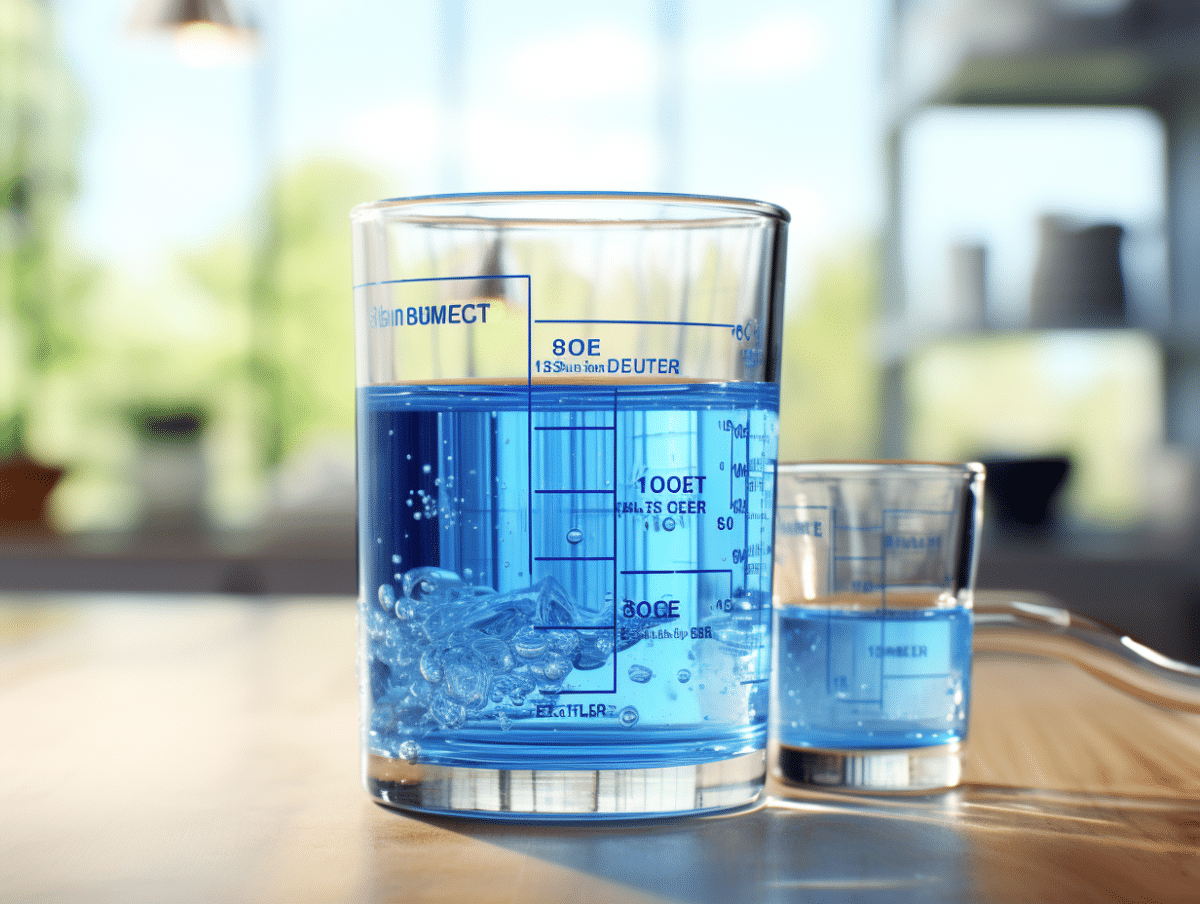
In a world where precision reigns, especially in culinary, scientific, and industrial fields, understanding measurement units and their conversion is essential. Take liquids, for example, whose volumes are commonly expressed in milliliters and liters. The ability to convert these units into one another is a fundamental skill that simplifies daily life, whether it’s to follow a recipe to the letter or to successfully conduct an experiment in a laboratory. Demystifying the conversion process between milliliters and liters is akin to simplifying tasks that might otherwise seem daunting.
Understanding Volume Measurement Units: Milliliters and Liters
The measurement units of volume, namely milliliters and liters, are cornerstones in the metric system, used with almost universal generality. In this system, the liter is defined as the base unit for measuring liquid volume, while the milliliter, which is one-thousandth of a liter, is used to quantify smaller volumes. Consider that converting ‘350 ml to liters’ simply involves dividing the amount by one thousand, resulting in 0.35 liters.
At the heart of the laboratory as well as in the kitchen, the distinction between these two units is crucial. Liquid chemicals, for instance, require precise measurement to ensure the safety and efficacy of reactions. In this context, the milliliter provides a granularity that allows for precise handling of small amounts of liquid. Conversely, the liter is more suitable for larger volumes, avoiding an excess of figures that could lead to error.
The ease with which one navigates between these two measurements depends on familiarity with their intrinsic relationship: each liter contains one thousand milliliters. The conversion becomes an exercise in simple multiplication or division. Online conversion tools and calculators facilitate these operations, but a fundamental understanding of this relationship allows for valuable independence away from any digital device.

Key Steps to Convert Milliliters to Liters and Vice Versa
The transition from milliliters to liters, and vice versa, requires a straightforward yet rigorous methodology. The fundamental operation relies on a clear conversion factor: 1 liter equals 1000 milliliters. To convert milliliters to liters, divide the number of milliliters by 1000. Conversely, multiply the number of liters by 1000 to obtain a value in milliliters. This rule of three, elementary in its essence, serves as the foundation for any conversion between these two units.
To facilitate these conversions, using a conversion chart proves practical. This tool, often found in textbooks or on dedicated websites, presents different measurement units and their equivalent quantities in other units. The chart allows for a visual understanding of the relationship between milliliters and liters, thus promoting a lasting memorization of the equivalences.
In our digital age, online tools and conversion applications offer quick and accurate assistance. These online converters, by incorporating the conversion factor, enable instant calculations without any errors. Whether on a computer or a mobile device, these digital resources are accessible to everyone, anywhere, and at any time.
Let’s not forget the calculator, this timeless tool, a faithful companion to both students and professionals. Whether physical or built into a smartphone, it remains a valuable ally for efficiently converting volumes. Practicing conversion exercises not only enhances the ability to memorize these operations but also strengthens the overall cognitive function related to mental calculation.