
A translated video depends on a balance between the recorded voice, the original image and the scene’s pacing. When that balance is disrupted, the result sounds off, even if the audio recording is flawless. The problem is almost never the microphone or audio processing: it stems from the gap between what the voice says and what the viewer sees on screen.
Silences and breaths: the invisible rhythm of a translated video
Matching the total length of a translated line to that of the original is the first constraint a dubbing studio observes. But that alone is not enough.
A translation can fit within the same overall time while removing a hesitation, a breath between two clauses or a moment of reaction after a question. These micro-pauses contribute to the scene’s rhythm. They convey emotion, doubt or a shift in intent. When they disappear, the voice sounds mechanically pasted onto the image, without reflecting its nuances.
Preserving the timing of silences is therefore a separate goal from matching the overall duration. A two-second silence after a look into the camera does not serve the same purpose as an identical pause between two descriptive sentences. The translator and performer must treat every pause as part of the performance, not as empty space to fill.
Having a translated script approved before recording significantly reduces retakes, including for a Chinese voice-over, where pacing and tone requirements differ considerably from French.
Lip sync and pacing: why translation forces the voice
The usual instinct is to squeeze the translation into the original speaking time at all costs. The result is predictable: the voice speeds up in some passages, slows down unnaturally in others, and loses any consistency in its pacing.
Speeding up the voice to meet the timing makes it sound less natural than a slight lip-sync mismatch. The human ear detects forced pacing before the eye notices out-of-sync lip movements.
A more effective approach is to adjust the length of the translated text beforehand. Condensing a sentence, rephrasing a passage or expanding a line that is too short to avoid an awkward pause: these are adaptation choices, not literal translation. They allow the performer to speak at a natural pace in the target language.
How time constraints shape the script
- A long sentence in French may need to be rephrased more concisely in a language with more compact syntax, otherwise the delivery may feel rushed at the end of the line.
- A short line in the source language can leave an audible gap if the translation is not expanded with a natural addition (an interjection, repetition or adverb).
- Technical terms and proper names often take longer to pronounce, with little room for adjustment: they must be accounted for from the outset when writing the translated script.
Visual consistency: when the image contradicts the translated voice
The mismatch between image and sound is not limited to lip movements. Gestures, facial expressions and information displayed on screen all contribute to the viewer’s sense of coherence.
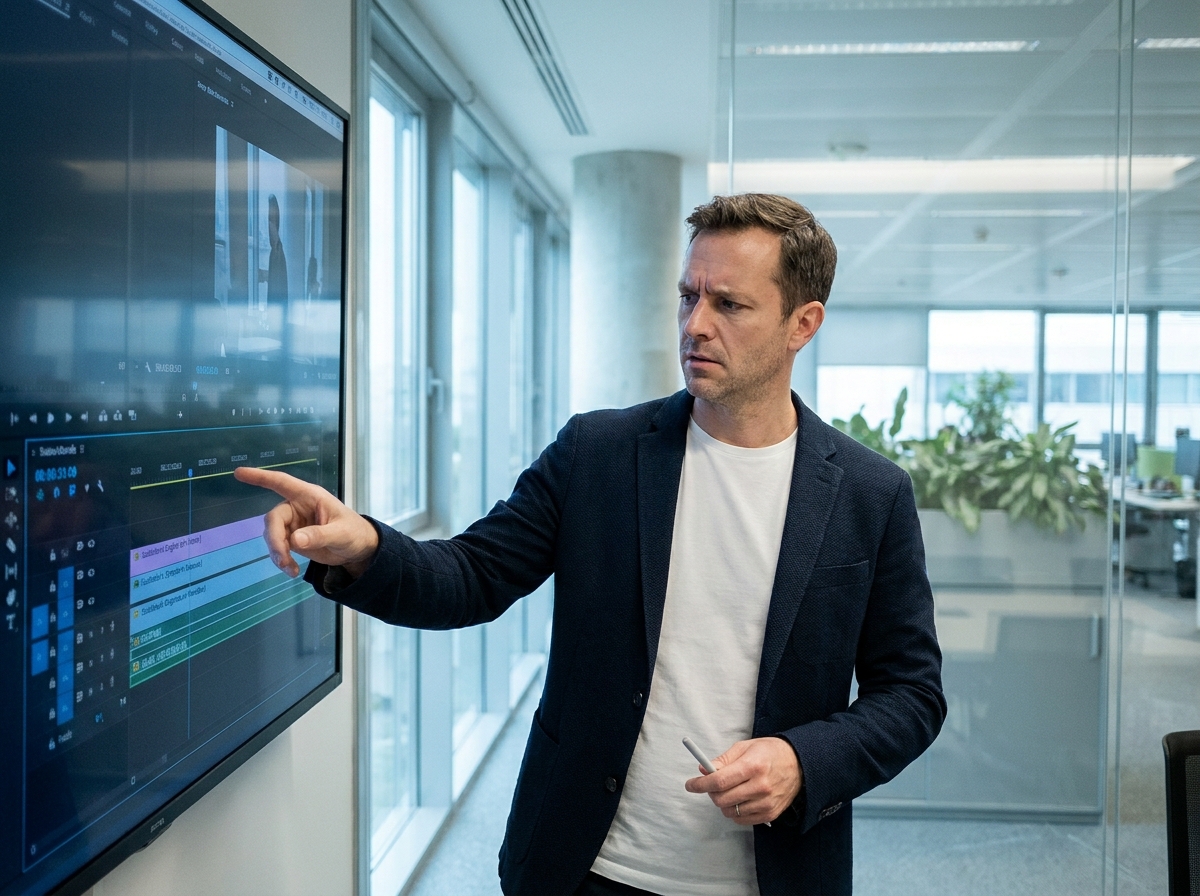
A character pointing to a chart while saying a line whose subject has changed in translation creates immediate cognitive dissonance. The viewer sees one thing and hears another, even if both are technically correct on their own.
On-screen text
Educational and corporate videos often display text, captions and slide titles. When the translated voice no longer matches the text on screen, credibility collapses. The viewer reads “Sales Report Q3” on screen while the French voice talks about annual strategy.
To assess a translated video, mute it and check what the image communicates on its own, then listen again while watching to see whether the voice and visual elements describe the same scene. This two-step check reveals inconsistencies that listening alone will not catch.
Expressiveness and vocal consistency: the limits of automated dubbing
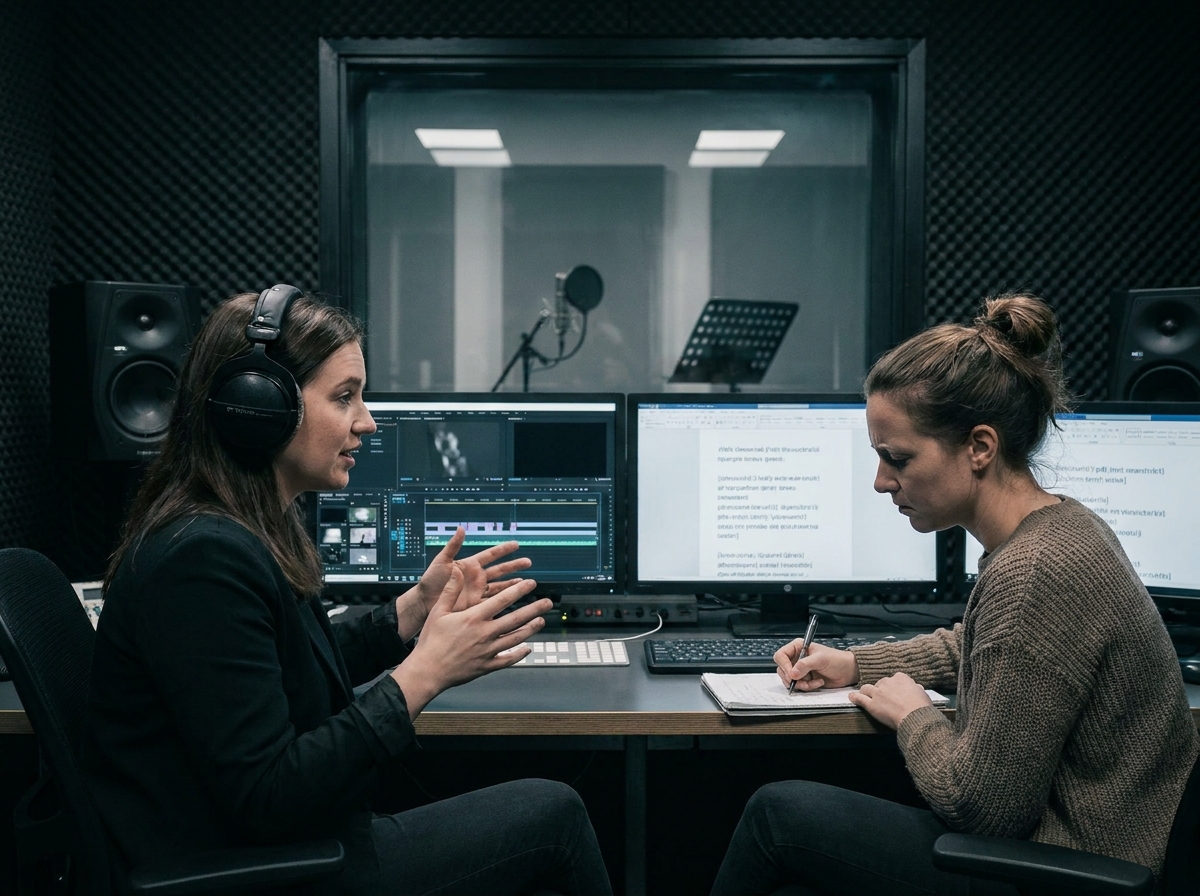
A voice can be clear and well recorded, with no breath noise or interference, and still sound wrong in the scene. The issue is then one of expressiveness: the voice does not carry the same emotional weight as the image.
Assessments comparing dubs generated by several automated platforms with studio-produced versions identify recurring issues beyond sound quality alone:
- Inconsistent voice from one line to the next (timbre, energy and register vary without any narrative reason).
- Insufficient expressiveness in emotional passages, where a performer would naturally vary their delivery.
- A mismatch between the tone of the voice and the action on screen (a neutral voice in a tense scene, an upbeat voice in a serious passage).
- Literal translation that produces unnatural phrasing in the target language, even when every word is correct.
Human linguistic and artistic review remains essential to produce a dub that stays true to the original scene. Automated tools provide a starting point, not a finished product.
A good recording therefore does not guarantee a good translated video. Perceived quality depends on the alignment between the adapted script, the vocal performance, the preserved silences and all the visual cues the viewer processes at the same time. Checking this alignment means watching the video as a viewer, not just as a sound engineer.