
The verdict of a side impact is never obvious. In France, liability in a side collision is not systematically assigned to one of the drivers. Unlike rear-end collisions, fault does not automatically arise from the position of the vehicles or the impact. The highway code provides for several scenarios where liability can be shared or reversed, depending on the circumstances and available evidence.
Some situations, such as the absence of signage or the presence of a failure to yield, alter the assignment of fault. Insurers and courts rely on precise rules, but also on exceptions, to determine the accountability of each driver involved.
Side impact: understanding the legal stakes of this type of accident
The side collision regularly occurs on urban roads, at intersections, or during tight turns. From a simple failure to yield to an open door without attention, every detail matters. The highway code, case law, and the Badinter law form a dense framework for resolving the issue of liability in this type of road accident.
If the victim is neither driving nor at fault, the Badinter law provides for full compensation, unless there is totally irresponsible behavior. For drivers, the search for fault remains the rule: forgetting to signal, refusing to yield, or running a red light are all elements that weigh in the balance. Insurers rely on expertise, witness statements, video surveillance, and of course the amicable report to reconstruct the scene.
The notion of liability in the case of a side impact according to Déclic Auto helps clarify things: the fault of a driver, the possible intervention of a third party, or the share of responsibility of each party are studied with precision, according to the circumstances and the evidence collected.
The repercussions of a side impact go beyond a simple dent in the bodywork. Injuries, vehicle immobilization, deductibles, penalties: these are all concrete consequences that affect the driver found at fault. When the analysis reveals shared faults, for example simultaneous direction changes or a common lack of vigilance, each driver assumes a part of the damage. Expertise then becomes the arbiter, often relying on the IRSA convention, even if the latter does not directly impose itself on the insured.
Who is responsible in the event of a side impact? The criteria established by French law
Assigning liability in a side impact relies on a strict reading of the highway code and an analysis of the facts. Each driver must respect signage, priority, and traffic rules. The slightest infraction, refusal to yield, crossing a solid line, or changing lanes without control, engages the liability of the one who commits it.
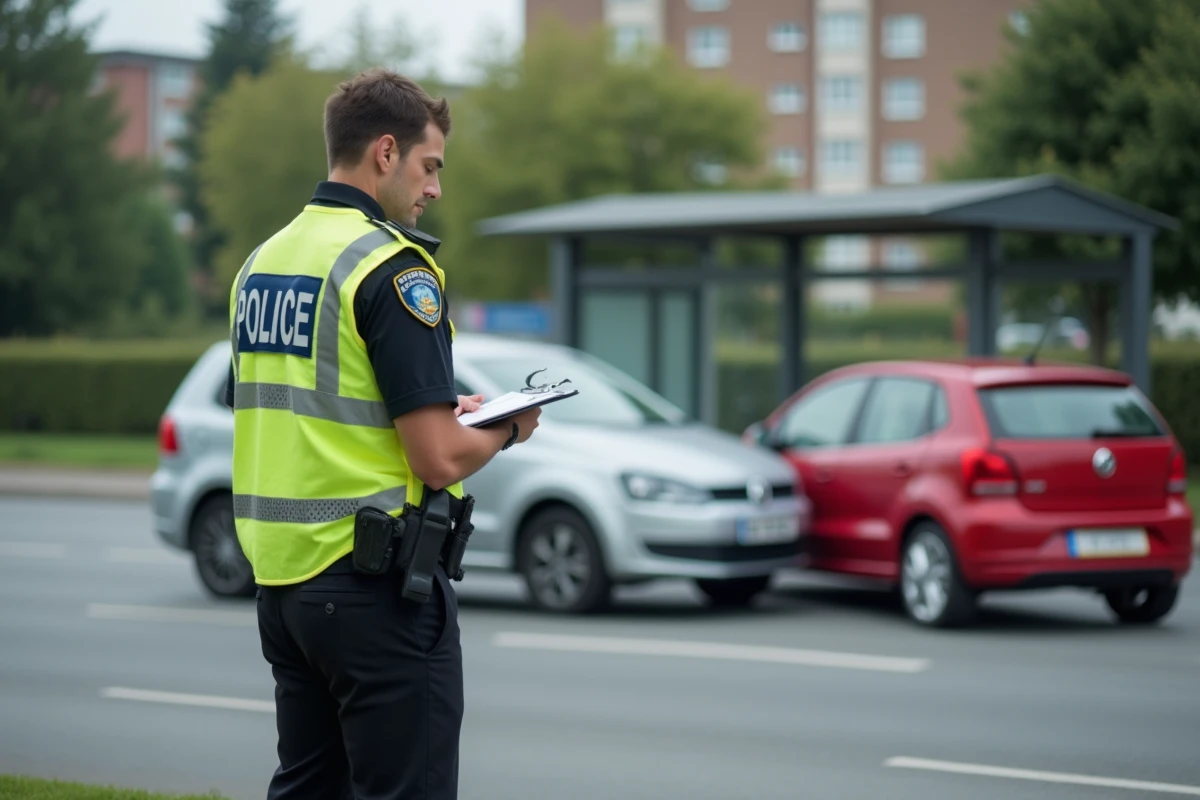
The amicable report opens the evidence gathering. Signed by both parties, it gives the insurer a first view of the accident and guides the decision on the liability incurred. Witness statements, video surveillance images, or technical expertise can supplement the file in case of disagreement. For non-driving victims, the Badinter law guarantees quick compensation, unless there is grossly negligent behavior. For drivers, everything hinges on proving fault and involvement in the accident.
Here are the main scenarios that influence the distribution of faults:
- If a driver neglects the right of way, the fault lies with them.
- When a door opens onto the roadway without checking, the responsibility falls on the person who opened it.
- In the case of simultaneous lane changes by two cars, the liability may be shared, with each bearing part of the consequences.
The IRSA convention, a reference for insurers in distributing claims, does not have mandatory force for the insured. Ultimately, it is case law, and as a last resort the Court of Cassation, that decides on the notion of fault and the modalities of compensation.
Shared liability, aggravating circumstances: how the law determines accountability in practice
The liability in a side impact is never reduced to a single fault. Multiple drivers may be implicated when, for example, each lacks vigilance or when imprudences accumulate: simultaneous maneuvers, ignored signage, relaxed attention approaching an intersection. In these situations, the notion of shared liability applies. Compensation varies, just like the penalty, which increases in proportion to the share of fault assigned. If liability is divided equally, each driver sees their premium rise, often by 12.5%.
Some behaviors worsen the situation. Opening a door carelessly, exiting a parking space without visibility, or crossing a solid line results in the full liability of the at-fault driver. In these cases, the insurer applies the deductible without nuance, and the coverage of material damages strictly depends on the contract taken out.
Rental or borrowed vehicles are treated the same way: the civil liability guarantee applies, and the insurer of the renter or lender comes into play according to the terms of the contract. If a driver flees or if the responsible party is not identified, the Guarantee Fund may intervene to support the victim, subject to compliance with legal conditions.
There remains one rule not to be overlooked: report the accident to your insurer within five days, providing all necessary documents, reports, witness statements, and photos. This reflex conditions a precise analysis of the accountability and the rapid initiation of compensation. The road does not forgive improvisation: for every side impact, the law scrutinizes, dissects, and assigns the share of responsibility with the rigor of an arbiter, sometimes ruthless, but always methodical.