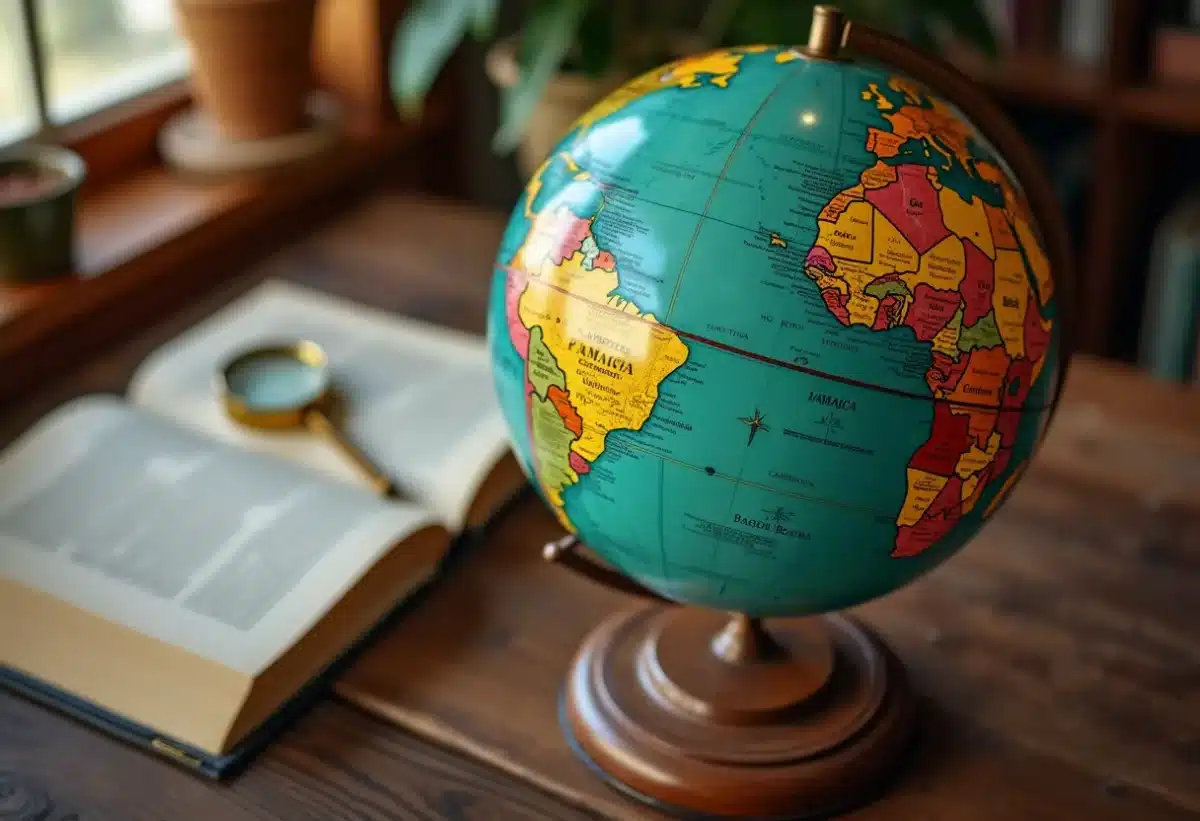
Lost in the heart of the Caribbean, Jamaica attracts with its paradise beaches and vibrant culture. But where exactly is this fascinating island located? Situated south of Cuba and west of Haiti, Jamaica is a gem of the Greater Antilles archipelago. Surrounded by the turquoise waters of the Caribbean Sea, it lies approximately 145 kilometers south of Cuba, thus offering a strategic position at the crossroads of maritime routes.
This island, though small, stands out for its geographical diversity. From the lush mountains of the Blue Mountains to the coastal plains, every corner of Jamaica offers a unique landscape. Its geographical location influences not only its tropical climate but also its rich cultural heritage, marked by African, European, and Asian influences.
Geographical Location of Jamaica
Jamaica, an island of the Greater Antilles, is located about 145 kilometers south of Cuba and west of the island of Hispaniola, shared by Haiti and the Dominican Republic. This strategic location, in the heart of the Caribbean Sea, positions Jamaica as a centerpiece of the Caribbean archipelago.
Kingston, the capital, is located on the southeast coast of the island. Spanish Town, the former historical capital, is also situated in this region, as well as Portmore. To the west, you will find Savanna-la-Mar and the region of St. Elizabeth, testifying to the geographical richness of the island.
- Area: 10,991 square kilometers
- Population: 2,827,377 (2022)
- Official Language: English
- Currency: Jamaican dollar
Jamaica has varied topography. The Blue Mountains, located in the east, rise to 2,256 meters with Blue Mountain Peak. The John Crow Mountains also border this region. In contrast, the coastal plains stretch along the northern and southern coastlines, offering contrasting landscapes.
The island extends the structural features of Haiti and is located near Honduras, across the Caribbean Sea. Jamaica’s position on the globe can be easily visualized using a map of Jamaica for a deeper geographical understanding.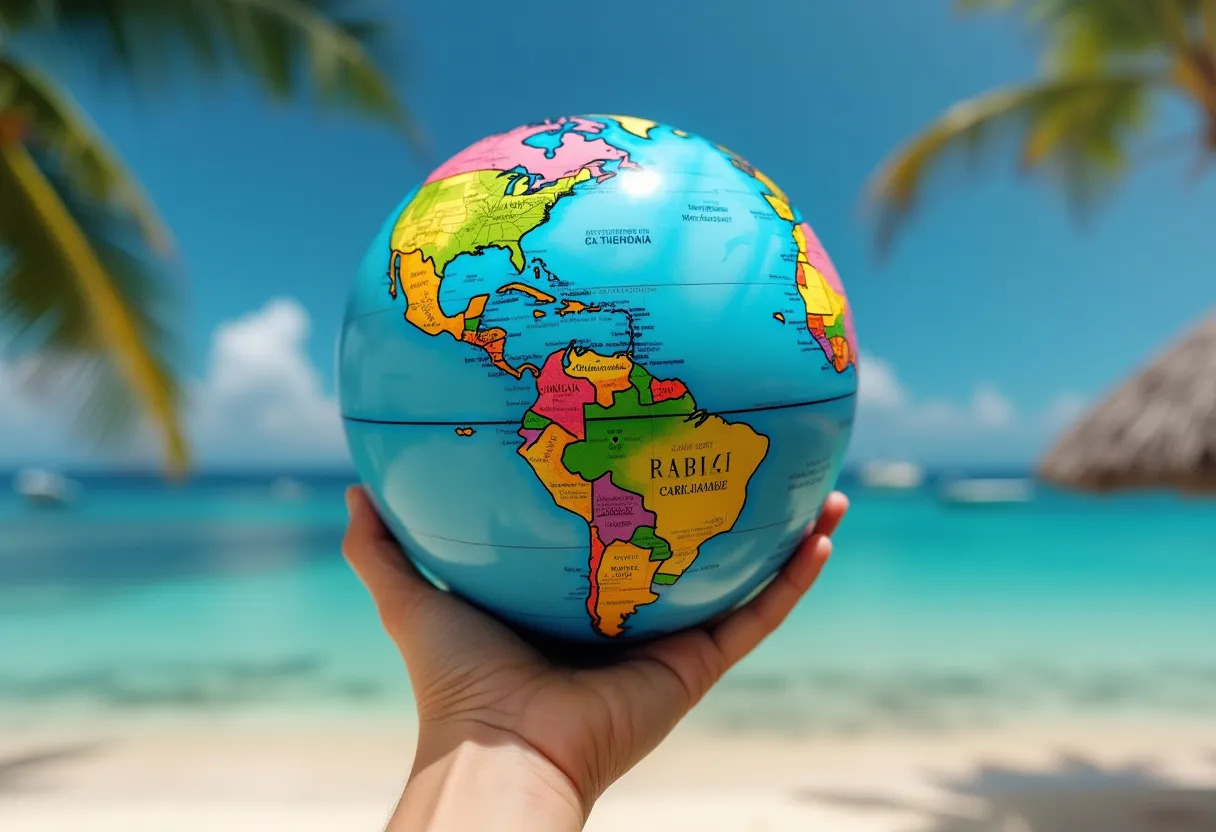
Physical and Natural Characteristics
Jamaica is distinguished by a diverse geography rich in reliefs. The Blue Mountains dominate its landscape in the east, with Blue Mountain Peak reaching 2,256 meters. These mountains, which host unique flora and fauna, are a central element of the island’s geographical identity.
The John Crow Mountains, also located in the east, add to the topographical complexity of the region. To the west, the reliefs soften, giving way to coastal plains and fertile valleys, such as those of the Rio Minho and Rio Cobre, two of the island’s main waterways.
| Characteristics | Data |
|---|---|
| Altitude of Blue Mountain Peak | 2,256 meters |
| Annual rainfall in Kingston | 735 millimeters |
| Forest cover | 16% of the territory |
Jamaica experiences two distinct seasons: a dry season from November to May and a wet season from May to November. These climatic variations are crucial for understanding the ecological dynamics of the island.
Jamaica is also subject to cyclones, which can strike during the wet season. These natural phenomena, sometimes devastating, strongly influence local living conditions and economic activities.
Consider the complex interactions between the mountains, valleys, and waterways to fully grasp the geographical richness of this Caribbean island.