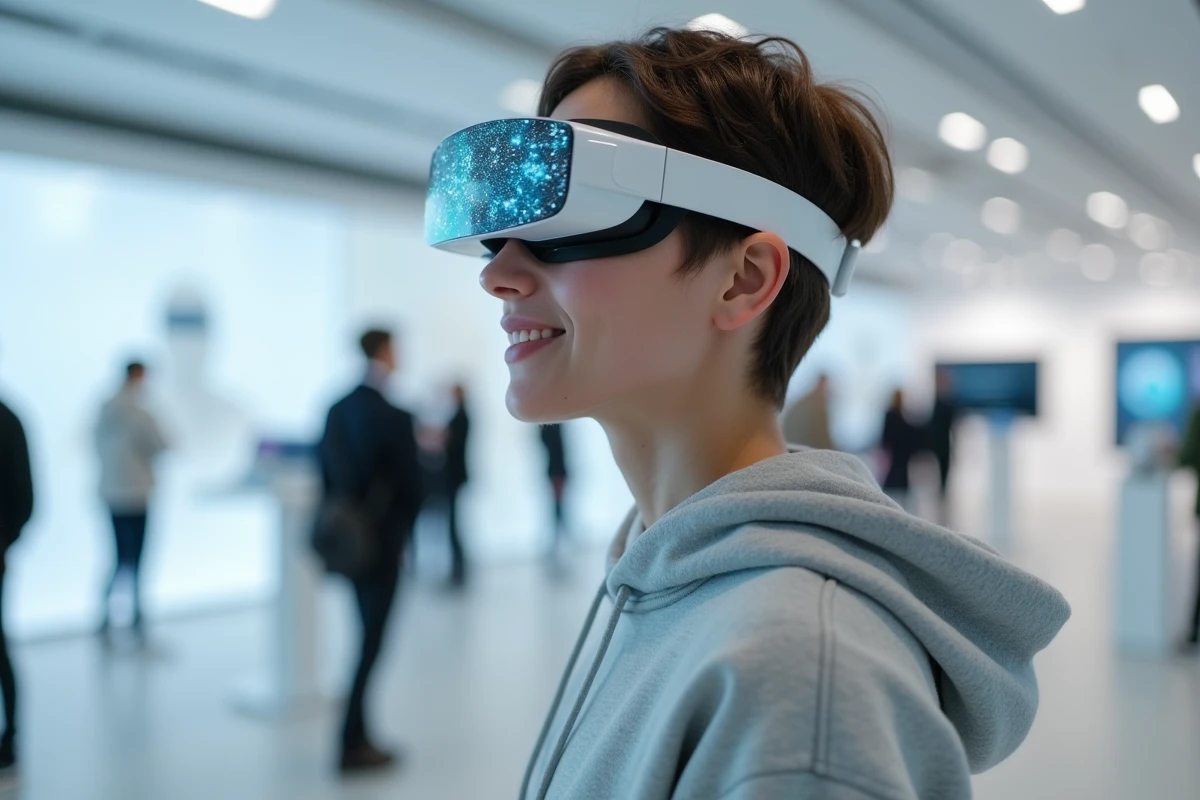
Consumer tech announcements dominate the news feeds: foldable smartphones, mixed reality headsets, ever-thinner smartwatches. Behind this continuous stream of consumer-oriented innovations, a more discreet shift is reshaping the landscape of innovation. The technologies that concentrate investments and patents in 2026 target sectors that most users never see: precision agriculture, industrial filtration, machine safety, embedded data analysis. This shift deserves our attention.
B2B high-tech innovation: the invisible sectors take center stage
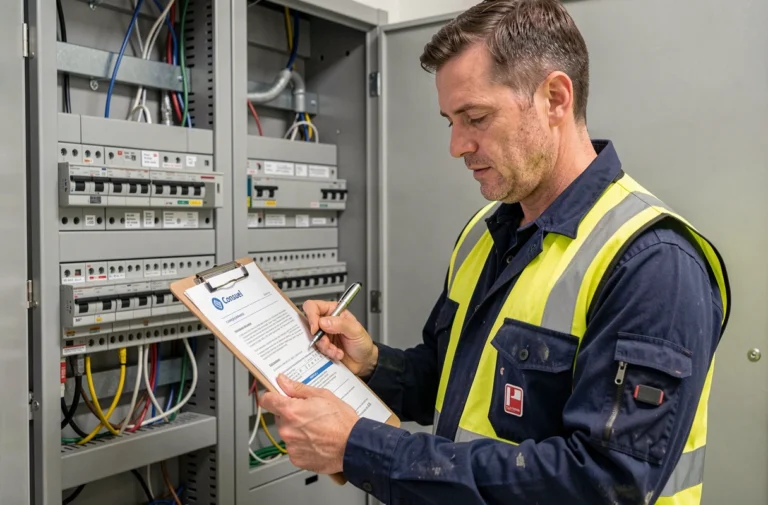
Several recent major trade shows, from GITEX to the ASUS Next Enterprise Summit and the VIPC Summit, have highlighted the same observation. The innovations presented as strategic are no longer gadgets aimed at the general public, but business solutions: embedded vision for quality control, air filtration sensors for heavy industry, data analysis platforms for logistics.
This rebalancing is not trivial. It reflects a change in priorities among manufacturers and investors. Profitability is shifting towards markets where technology solves a measurable operational problem, not towards recreational use.
In agriculture, precision sprayers now integrate sensors and algorithms that adjust the dosage of inputs plot by plot. The cost of inputs drives operators to adopt these tools, not out of technological enthusiasm, but out of economic necessity.
Field reports vary on the actual gains depending on the types of crops, but the adoption trend is accelerating. To keep track of these ongoing changes, the tech section of Comptoir d’Encre regularly covers these topics at the intersection of innovation and practical uses.

Generative artificial intelligence and transparency obligations
Generative artificial intelligence remains the dominant topic in tech trends in 2026. Language models, image generation, and code generation are being deployed across all layers of the economy. What changes this year is not so much the power of the models as the framework surrounding them.
Regulatory developments around the responsible use of generative AI are transforming how companies integrate these tools. Transparency obligations regarding generated content, constraints on training data, audit mechanisms: these requirements, now integrated into the OECD’s innovation dashboards, make compliance a field of innovation in its own right.
In practical terms, this means that deploying a chatbot or an automatic report generation tool is no longer just a technical choice. Companies must document data sources, trace algorithmic decisions, and sometimes submit their models to external audits. The cost of compliance becomes a budget item that technical departments had not anticipated.
Model governance: a new tech profession
Specialized profiles are emerging around this constraint. Model governance for AI mobilizes hybrid skills, straddling legal, data science, and risk management. Job offers in this field are multiplying, a sign that the market is structuring an organizational response to regulatory pressure.
Gap between technological capabilities and actual adoption
Recent reports from WIPO point out a paradox. Technological innovation capabilities (AI, semiconductors, cloud, biotech) are advancing rapidly. In contrast, the gap with other dimensions of innovation (organizational, social) is widening. In other words, the tools exist, but many countries and actors are struggling to integrate them into the real economy.
This gap manifests in several ways:
- Companies acquire advanced software licenses without training their teams, limiting actual use to a fraction of the available features.
- Communities invest in open data platforms without business processes to leverage the collected information.
- Agricultural operations equipped with precision sensors continue to make decisions based on empirical experience, lacking suitable technical support.
The problem is not a lack of technologies. It is a deficit of integration between the tool and the context of use. The available data do not allow for conclusions about the exact extent of this phenomenon by sector, but the trend is documented globally.
Tech trends 2026: what trade shows reveal
B2B events in the first half of this year outline a fairly clear map of industrial priorities. Three axes concentrate attention:
- Embedded vision and machine safety, with detection systems capable of identifying anomalies on a production line in real time.
- Air filtration and treatment in industrial environments, boosted by post-pandemic health standards that remain in effect.
- Operational data analysis, where platforms are moving from monthly reporting to predictive alerts.
These innovations do not generate viral videos. They do not make headlines on consumer tech news sites. Their economic impact, however, is structural. A factory that reduces production downtime through predictive maintenance gains sustainable competitiveness, whereas a faster smartphone marginally improves user experience.
France and the Francophonie: what role in this reconfiguration
The French industrial fabric, largely composed of SMEs and mid-sized enterprises, faces a specific challenge. Access to new technologies exists, but scaling up remains hindered by integration costs and the scarcity of intermediate technical skills. Large companies have dedicated teams; smaller structures must balance technological investment with other priorities.
Recent initiatives, such as summits dedicated to financing innovation in the Francophone ecosystem, aim to bridge this gap. Field feedback shows that human support, on-site training, and adapting tools to the local context remain the key success factors, far more than the sophistication of the technology itself.
Media coverage of high-tech trends would benefit from going beyond the stream of product announcements to document these fundamental transformations. The innovations that matter in 2026 do not fit in your pocket; they operate in warehouses, fields, and data centers, far from the spotlight.