Some natural treatments rival conventional medicine in managing chronic disorders. Despite this, their official recognition varies widely depending on the country and medical context.
Today, healthcare professionals are integrating complementary strategies into their practice, borrowed from various traditions. Recent studies on the effectiveness of certain alternative methods fuel a dynamic debate about their place in care pathways.
Why the holistic approach changes our view of health
Holistic therapy shifts the perspective: health is no longer just a simple addition of symptoms to erase, but is seen as a complete experience. The mind-body connection then takes on its full dimension. Rather than viewing the body as a machine to be repaired, this vision perceives it as a living whole, infused with a vital energy that flows, expresses itself, or may become obstructed. This approach challenges our benchmarks and questions the boundary between physical and mental.
Caring for one’s health involves listening to signals, engaging in dialogue with oneself, and identifying the links between emotions and bodily sensations. Holistic approaches encourage revisiting our habits, often dictated by external imperatives. Paying attention to the mind-body connection opens up new perspectives. Stress, fatigue, pain: these states are no longer endured but interpreted as messages, invitations to transform one’s lifestyle.
More and more holistic health professionals are choosing this path, backed by training focused on mind-body interconnection. Their role is to support the patient in a process that prioritizes self-awareness, prevention, and autonomy, beyond mere reliance on conventional care.
To better understand the diversity of these practices and grasp their coherence, visiting the Art de Guérir website provides access to a demanding overview of the holistic field. Here, there are no shortcuts or miracle recipes: holistic medicine offers a thorough exploration of your body, your mind, and their ongoing dialogue.
What are the main principles and natural methods to promote well-being
Foundational principles and tools
Naturopathy offers a holistic view of the human body. It is based on major axes: a coherent lifestyle, an appropriate diet, regular practice of physical activity, and quality sleep. Rather than seeking a universal solution, it favors tailored responses, adjusted to each person’s lifestyle and needs.
Here are some key practices that illustrate this diversity of approaches:
- Massage: it stimulates blood and lymphatic circulation, relaxes muscles, and induces deep relaxation. Each technique targets specific needs.
- Art therapy: through creativity, it helps manage emotions and reduce mental pressure. A real support in cases of sleep disorders or anxiety.
- Traditional Chinese medicine: acupuncture, moxibustion, herbal medicine… Here, everything aims to restore energy circulation and reestablish inner balance.
Stress management and daily balance
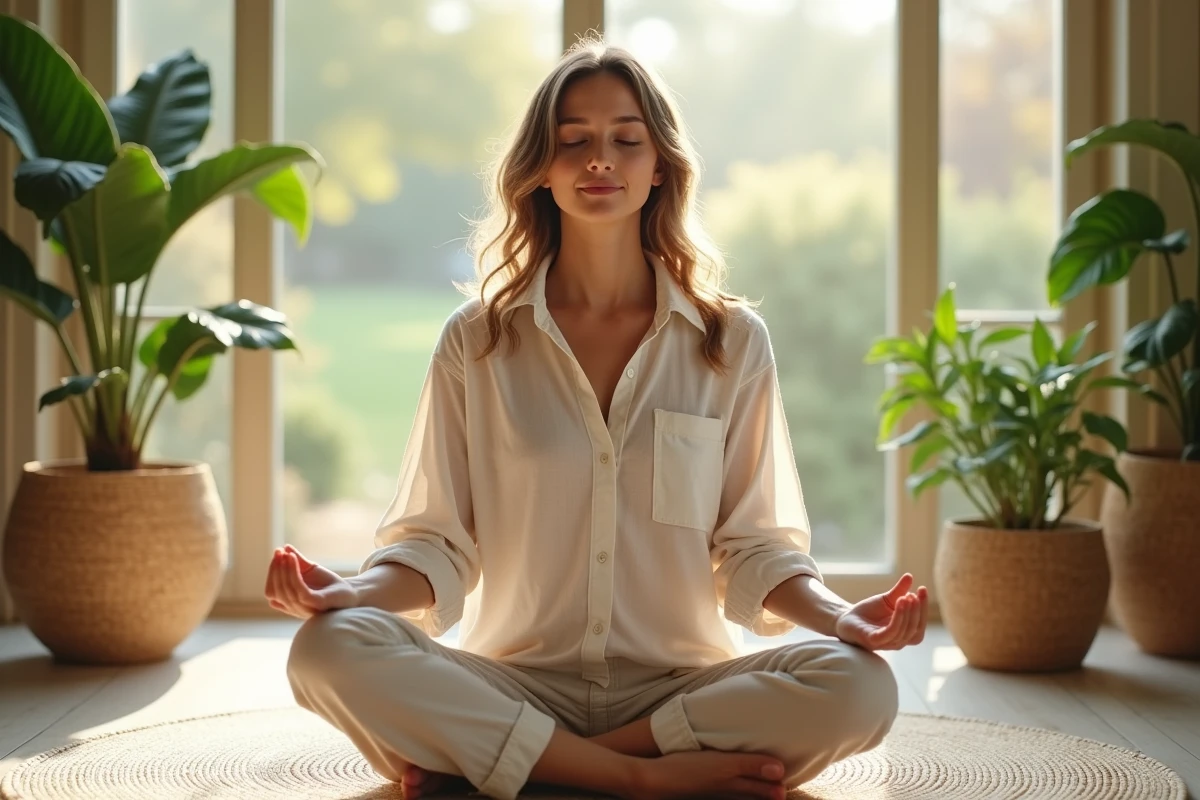
Stress management techniques have become essential for preserving physical and mental health. Conscious breathing, relaxation, meditation: these tools, sometimes complemented by personalized support, help prevent burnout, stabilize mood, and cultivate restorative sleep.
The holistic approach never separates the mental from the physical. It encourages prevention, autonomy, and a fine-tuned listening to internal signals. Taking time for observation, adjusting one’s pace, enriching daily life with small gestures: these are concrete levers for feeling better.
Exploring the concrete benefits of alternative therapies in daily life
Tangible effects on well-being and mental health
Alternative therapies are now part of the daily lives of people from all walks of life. Many report a real improvement in dealing with stress or sleep disorders. Natural methods, by restoring balance between emotions and the body, provide concrete solutions for coping with fatigue, irritability, or mental distraction.
Those experiencing psychological difficulties draw from these practices to overcome anxiety, exhaustion, or loss of motivation. The regularity of an adapted activity, such as stress management exercises, establishes lasting benefits. Relaxation, art therapy, creative rituals: each technique becomes a space for expression, fostering relaxation and reclaiming the body.
Here are some action levers for daily life:
- Stress and anxiety management: deep breathing, visualization, simple movements, all gestures to soothe the nervous system.
- Improving sleep: relaxation rituals, listening to the body’s needs, reducing screen time before bed.
- Emotional balance: creativity, written or musical expression to channel what fluctuates inside.
Repositioning the mind-body relationship at the center of the care pathway transforms the perspective on symptoms and invites the cultivation of a more holistic, vibrant health. Because beyond diagnoses, it is about exploring what connects, what makes sense, what moves us forward.